
Sora vs Veo: Best AI Video Generator Comparison 2026
Compare Sora 2 and Veo AI video generators in 2026. See which actually works, current limitations, and why you shouldn't rely on just one.
Table of Contents
- What Happened to Sora (And Why It Matters)
- Veo's Strengths (When You Can Access It)
- Model Performance Breakdown: Speed, Quality, and Context
- The Access Problem (And Why It Is Getting Worse)
- What Creators Actually Need (And How to Get It)
- The Real Comparison: Single Model Loyalty vs. Multi-Model Workflows
- Bottom Line: Stop Waiting, Start Generating

The AI video generator landscape changed overnight. Sora 1 shut down on March 13, 2026. Sora 2 launched with more features and far more problems. Videos freeze at 99%. New accounts wait days for approval. Free access vanished entirely in January. If you subscribed to ChatGPT Plus hoping to generate video reliably, you probably spent the last month refreshing error messages.
Veo promised Google's answer to generative video, but access remains scarce and performance data even scarcer. The tools that dominated headlines six months ago are either gone or gasping. This is not the future we were promised in early 2025, when both OpenAI and Google teased cinematic AI generation for everyone.
Here's what actually works in 2026, how Sora and Veo stack up when they do work, and why betting on a single model is the wrong strategy. You will learn which strengths each platform brings, what the current access situation looks like, and how to pick tools based on your actual project needs instead of hype cycles.
What Happened to Sora (And Why It Matters)
Sora 1 is dead. OpenAI retired it completely in the US on March 13, 2026. Every video you generated, every favorite you saved, every mashup you stitched together , gone. The data export window closed. There is no archive. Image generation moved to ChatGPT's main interface. The product simply vanished.
Sora 2 replaced it, but calling it a replacement feels generous. The new version generates clips up to 20 to 40 seconds long, a real improvement over Sora 1's 3 to 5 second limit. Resolution improved. Motion coherence got better in controlled tests. On paper, Sora 2 is the upgrade everyone wanted.
In practice, it breaks constantly. Videos hang at 99% completion and never finish. Error messages claim the system is "under heavy load" even during off-peak hours. New accounts require one to three days of review before generating anything, even after upgrading to ChatGPT Plus. Free users got permanently cut off in January 2026, though the UI still displays "temporarily disabled" to soften the blow. Daily credit caps hover around 30 regardless of your subscription tier. Content moderation blocks prompts aggressively, rejecting innocent requests without explanation.
The pricing model makes it worse. ChatGPT Plus costs twenty dollars monthly. ChatGPT Pro costs two hundred. Neither guarantees reliable generation. You pay for access to a queue, not results. The subscription buys you the right to wait and hope your render completes.
Third-party APIs emerged as workarounds. Services like APIYI let you call Sora 2 on a pay-as-you-go basis without subscription limits. You skip the daily caps but inherit all the technical failures. The video still gets stuck. The moderation still blocks you. You just pay per attempt instead of per month.
This matters because Sora shaped expectations for the entire AI video category. When OpenAI teased early demos in 2024, every competing platform scrambled to match its cinematic quality. Sora set the bar. Now that bar is behind a broken paywall, and creators who planned workflows around it are stuck.
Veo's Strengths (When You Can Access It)
Veo launched as Google DeepMind's counterweight to Sora. The technical foundation is different. Veo uses a diffusion-based architecture optimized for photorealism and motion stability. Early demos showed clean camera movements, convincing lighting, and fewer morphing artifacts than Sora 1. Google positioned it as the practical choice for creators who need consistent output over experimental features.
Access is the problem. As of early 2026, Veo remains in restricted beta. You cannot simply sign up and start generating. Google gates availability through waitlists, partner programs, and enterprise trials. Public documentation is thin. Performance benchmarks are scarce. User reports focus on limited test cases rather than production workflows.
When you do get access, Veo excels at specific tasks. Photorealistic environments render cleanly. Product shots hold detail across frames. Camera moves feel more controlled than Sora's occasionally chaotic motion. Veo prioritizes predictability, which matters when you are generating assets for a client or a deadline.
The trade-off is creative range. Sora handles abstract prompts and stylized requests better. Veo prefers concrete descriptions of real-world scenes. Ask Veo for a dreamlike sequence with impossible physics and it struggles. Ask for a tracking shot through a forest at golden hour and it delivers.
Speed is another variable. Veo generation times fluctuate based on length and complexity, but reports suggest it runs faster than Sora 2 for clips under ten seconds. Longer renders take proportionally more time. There is no public SLA or guaranteed turnaround, so planning around Veo for time-sensitive projects is risky.
Pricing details remain unclear because Google has not launched a public tier. Enterprise pilots reportedly charge per seat or per render volume, but exact rates are not published. Speculation puts it somewhere between Sora's subscription model and traditional VFX rendering costs, but without transparency it is impossible to budget.
Veo's biggest strength might be what it is not. It is not OpenAI, so it does not inherit Sora's infrastructure meltdowns or moderation quirks. It is not trying to be everything to everyone. If Google ever opens public access with stable pricing, Veo could become the boring, reliable option. That would be a compliment in 2026.
Model Performance Breakdown: Speed, Quality, and Context
Prompt Example
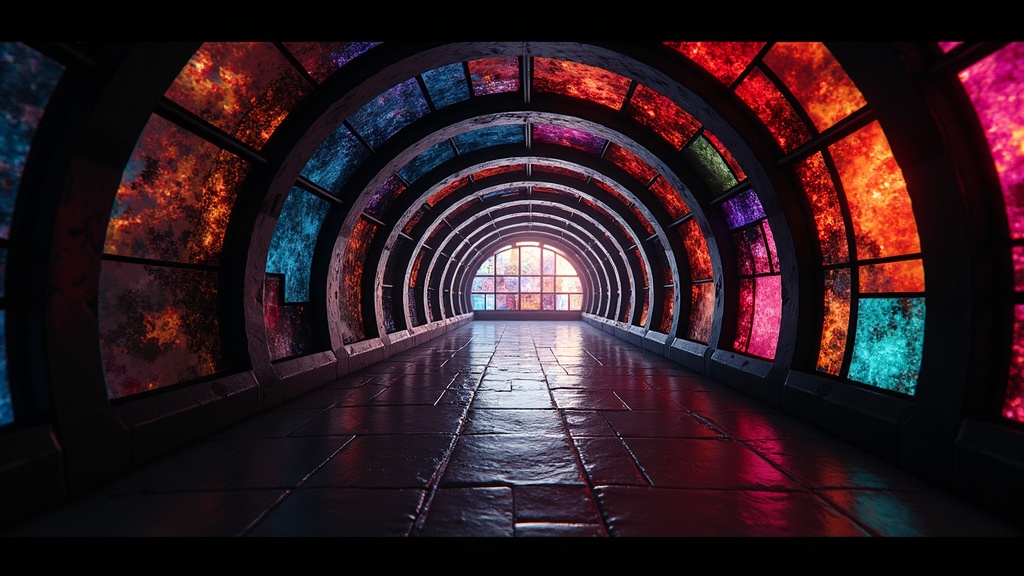
Comparing Sora and Veo directly is harder than it should be. Sora 2 is accessible but unreliable. Veo is stable but inaccessible. Neither company publishes standardized benchmarks. User experiences vary wildly based on account status, subscription tier, and time of day.
Quality depends entirely on what you are making. Veo produces cleaner photorealistic renders with fewer hallucinations. Objects stay consistent across frames. Lighting behaves predictably. If you need a product demo, an architectural walkthrough, or a nature scene, Veo wins on fidelity.
Sora handles creative abstraction better. Stylized animation, surreal sequences, and complex motion paths lean into Sora's experimental roots. It takes bigger risks with the output, which means more failures but also more surprising successes. A prompt like "kaleidoscopic tunnel made of stained glass, camera spiraling inward" will get interesting results from Sora and literal confusion from Veo.
Speed is context-dependent. Veo generally renders faster for short, simple clips. Sora 2 bogs down under high demand and daily caps, so even fast renders get queued. If you hit Sora during a low-traffic window, generation times drop noticeably. Veo's speed stays more consistent because fewer users have access. Once Veo scales to public availability, that advantage may evaporate.
Resolution and frame rate also split by use case. Both platforms support HD output, but Veo maintains detail better in motion-heavy scenes. Sora sometimes softens or blurs fast movements to preserve coherence. Frame interpolation quality favors Veo for smooth camera motion. Sora occasionally introduces judder or uneven pacing.
Neither platform is universally better. That sentence is important enough to repeat. Neither platform is universally better. Choosing between them means understanding your project's priorities. A commercial director shooting b-roll needs Veo's reliability. An experimental filmmaker prototyping concepts benefits from Sora's creative reach. You do not pick the best model. You pick the right model for the shot.
The real comparison is not Sora versus Veo. It is single-model dependence versus multi-model access. Betting everything on one platform locks you into its weaknesses. When Sora goes down, you stop working. When Veo restricts access, you lose your pipeline. Smart workflows route tasks to the model that handles them best, not the model that sounds most impressive in a headline.
The Access Problem (And Why It Is Getting Worse)
You cannot use what you cannot access. That basic truth defines AI video generation in 2026 more than any feature announcement or benchmark score.
Sora 2 theoretically offers open access through ChatGPT Plus. Pay twenty dollars monthly and you get credits. Except new accounts wait days for approval. Daily caps restrict output even for paying users. Generation failures waste credits without producing usable footage. "Under heavy load" errors appear regardless of server status. The access is real but barely functional.
ChatGPT Pro at two hundred dollars monthly raises the caps but does not eliminate the failures. You get more attempts, not more reliability. For professional creators billing clients or meeting deadlines, that distinction matters. A higher tier that fails less often is still a failure point.
Veo has no public tier at all. Waitlists stretch indefinitely. Enterprise pilots require contracts and minimums. Partner programs favor large studios and brands over individual creators. Google has not announced a timeline for general availability. Access is a lottery you cannot buy a ticket for.
This creates a planning problem. You cannot build a production workflow around tools you might lose access to tomorrow. Sora 1 users learned this the hard way when the platform shut down and deleted everything. Veo beta testers face the same risk if Google pivots priorities or restructures the program.
The situation is getting worse, not better. Sora's free tier vanished permanently in January 2026 despite UI messages claiming it is temporary. OpenAI's messaging intentionally misleads users to discourage workarounds and push subscriptions. Veo remains behind closed doors with no signs of opening. Other platforms struggle to compete on quality, so creators feel trapped choosing between inaccessible excellence and accessible mediocrity.
Third-party APIs offer partial solutions but inherit platform instability. You can route Sora 2 calls through APIYI or similar services to bypass subscription limits, but the underlying model still breaks. You trade billing flexibility for the same technical failures. The API does not fix the video stuck at 99%.
Regional restrictions compound the problem. Sora 1's shutdown applied to the US, but other regions followed staggered timelines. Veo's availability varies by country with no public roadmap. Building an international team around these tools means navigating different access levels and launch dates for the same product.
The pattern is clear. Centralized platforms with single-model access will always create bottlenecks. When OpenAI prioritizes enterprise features over creator stability, you lose. When Google gates Veo behind partnerships, you wait. The access problem is not a bug. It is the business model.
What Creators Actually Need (And How to Get It)
Creators need speed when they are prototyping. They need quality when they are delivering. They need reliability when they are billing clients. No single AI video model solves all three, and the big platforms are not designed to.
Speed comes from fast iteration. You test ideas, throw away bad outputs, refine prompts, and repeat. This requires cheap or free access to quick models that prioritize turnaround over polish. Sora 2's daily caps kill iteration. Veo's restricted access blocks it entirely. The platforms built for headlines are not built for sketching.
Quality comes from resolution, coherence, and stylistic control. When you need a final asset that holds up in a timeline, you reach for models trained on high-fidelity data with strong motion consistency. Both Sora and Veo can deliver this in theory. In practice, Sora's failures and Veo's inaccessibility mean you cannot count on either.
Reliability means the tool works when you need it. Server uptime, predictable processing times, and transparent pricing. Sora 2 fails this completely. Veo has no public pricing to evaluate. The biggest names in AI video generation are the least reliable options for working creators.
What actually works is multi-model access. You do not marry one platform. You use the model that fits the task. Fast previews go to one tool. High-fidelity finals go to another. Photorealistic product shots use a different model than abstract concept art. Your credits work across all of them, so a failure in one model does not halt your entire project.
This is not about hedging bets. It is about matching tools to tasks. A carpenter does not use a hammer for every job. A cinematographer does not shoot everything on the same lens. Creators should not force every video generation task into the same model just because it has the most famous name.
The infrastructure matters as much as the models. You need a platform that explains the trade-offs clearly. Veo 3 is fast but photorealistic. Another model is cinematic but slower. The interface should tell you which model to reach for based on your project, not which brand to be loyal to.
Credits should transfer across models. If you pay for generation capacity, it should work regardless of which underlying model processes the job. Subscriptions that lock you into one platform's ecosystem are designed to benefit the platform, not you. Portable credits benefit creators.
Workflow integration beats feature lists. Image generation, video generation, storyboarding, and shot variation tools should live in the same place. Jumping between platforms for each step breaks focus and wastes time. A real creator platform consolidates the pipeline.
No lock-in means you can leave when something better appears. The best AI video tool in 2026 will not be the best in 2027. Technology moves too fast. Contracts and subscriptions that trap you for months or years are hostile to creators who need to adapt quickly.
The Real Comparison: Single Model Loyalty vs. Multi-Model Workflows
Prompt Example

Sora versus Veo is the wrong question. The real choice is between betting on one model and building flexible workflows.
Single-model loyalty makes sense if you only have one task and one model does it perfectly. That scenario does not exist in 2026. Sora 2 generates cinematic footage when it works, but it fails too often to rely on exclusively. Veo produces clean photorealism when you can access it, but most creators cannot. Committing to either means accepting their weaknesses as your weaknesses.
Multi-model workflows give you options. When Sora is down, you generate with another model. When Veo does not handle stylized prompts well, you route those to a different tool. Your project does not stop because one company's servers are overloaded or one platform's moderation flagged your prompt.
This approach requires infrastructure. You need a platform that supports multiple models without forcing separate subscriptions for each. You need credit systems that work across all of them. You need clear documentation on which model handles which tasks best. Building this yourself by juggling accounts and APIs is possible but exhausting.
The trade-off is learning curve. Understanding one model deeply feels simpler than understanding six. But mastery is not the goal. Knowing which tool to reach for is. A director does not need to master every camera system ever made. They need to know which camera fits the shot. The same logic applies to AI video models.
Cost structures favor multi-model access too. Sora 2 charges twenty to two hundred dollars monthly regardless of how much you actually generate. If you only need video generation twice a month, you are paying for unused capacity. Pay-per-use credits across multiple models scale with your actual work. You spend when you generate, not just for the option to generate.
Flexibility accelerates when new models launch. A multi-model platform can integrate the latest release within days. Single-model platforms require you to open a new account, learn a new interface, and manage another subscription. Every new tool adds friction. Centralized multi-model platforms remove it.
The risk profile also improves. Sora 1's shutdown erased user content overnight. If your entire workflow depended on Sora, you lost your archive and had to rebuild from scratch. Distributing your work across multiple models means one shutdown does not destroy your production history.
None of this is theoretical. Creators working on real projects in 2026 already route tasks this way. They use Veo 3 for fast concept tests. They use other models for final cinematic renders. They swap between models mid-project when one fails or delivers unexpected results. The workflow is not "pick your favorite and stick with it." It is "use what works for this specific shot."
ApeFX builds for this reality. Multi-model access is not a bonus feature. It is the foundation. Your credits work across every model on the platform. You do not need to master one model. You need to know which model to reach for. The interface explains the differences so you can choose fast. Image generation, video generation, storyboarding, outfit swap, and camera angle tools live in one place. No lock-in. No loyalty required.
Generate videos and images like these on ApeFX
27+ AI models in one platform. Start with 30 free credits, no credit card needed.
Start Generating FreeBottom Line: Stop Waiting, Start Generating
Sora 2 is cinematic when it works and broken when it does not. Veo is photorealistic when you can access it and unavailable when you cannot. Both have strengths. Neither is reliable enough to build your workflow around exclusively.
The answer is not picking the winner between them. The answer is stopping the comparison and starting the work. You do not need the perfect tool. You need the right tool for the shot you are making today. That changes project to project, scene to scene, sometimes shot to shot.
Waiting for Sora to stabilize or Veo to open public access is a plan for staying stuck. The tools that matter in 2026 are the ones you can use right now. Speed matters more than perfection when you are testing ideas. Access matters more than features when you are on a deadline. Reliability matters more than brand names when you are billing clients.
Multi-model workflows are not a compromise. They are the professional approach. You match the tool to the task. You keep working when one platform fails. You adapt when new models launch. You spend money on generation, not subscriptions to broken promises.
Try it now , 30 free credits to test any model.